
Battery and Solar CCTV Cameras: Where They Make Sense
Quick answer
Battery and solar cameras cover places where running cable is difficult — farms, plots, gates and construction sites. Here is what to expect before you buy.
By ITvein TeamPublished Updated 2 min read
Not every place you want to watch has a power point nearby. Farmhouses, empty plots, boundary walls, construction sites and rented properties are all common examples. Battery and solar cameras exist for exactly these situations.
How they work
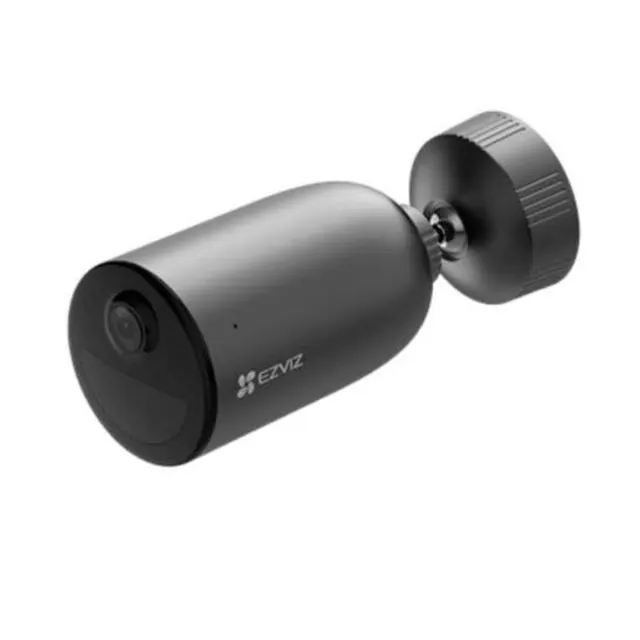
A battery camera has a rechargeable battery and usually sleeps until its motion sensor (often a passive infrared, PIR, sensor that detects body heat) wakes it. It then records a clip to a microSD card or cloud, sends an alert, and goes back to sleep. A solar panel, built in or separate, tops up the battery during the day.
Most models connect over Wi-Fi; some use 4G with a SIM card for sites without internet.
What to expect
- Event recording, not 24/7. To save power, most battery cameras record clips when they detect motion rather than continuously. There can be a short delay as the camera wakes up.
- Battery life varies widely. It depends on the number of events, live viewing, temperature and signal strength. A camera at a busy gate drains far faster than one on a quiet wall.
- Solar needs real sun. The panel should face open sky for several hours a day. Shade from trees or buildings reduces charging.
- Connectivity is the weak point. Wi-Fi models need a signal at the mounting point; 4G models need good mobile coverage and a data package.
Where they make sense
- Farmhouses and agricultural land.
- Empty plots or houses under construction.
- Gates and boundary walls far from the main building.
- Temporary sites and rented homes where drilling for cables isn't allowed.
- As a quick extra camera alongside a wired system.
Where wired is better
- Busy entrances with constant movement (battery drains quickly).
- Places where you need continuous recording for evidence.
- Shop counters and offices.
For these, see Wi-Fi vs wired CCTV.
Buying checklist
- Connectivity: Wi-Fi (check signal) or 4G (check coverage and SIM compatibility).
- Storage: microSD slot and/or cloud plan.
- Detection: PIR with person detection reduces false alerts from trees and shadows.
- Solar panel: included or optional; cable length to reach a sunny spot.
- Weatherproofing: IP65 or better. See IP66 and IK10 ratings.
- Night vision: IR or colour with spotlight.
Browse battery and solar cameras.
Tips for reliable performance
- Mount the camera 2–3 metres high and angle it so people walk across the view rather than straight toward it — PIR sensors detect sideways movement better.
- Set detection zones to ignore roads and swaying trees.
- Clean the solar panel regularly; dust in Pakistan's dry months cuts charging noticeably.
- Check battery level in the app each week for the first month to learn the real-world pattern.
Frequently asked questions
How long does a battery camera last on one charge?
It ranges from a few weeks to several months, depending on how often it is triggered and how much you watch live. Solar panels can keep it topped up in sunny locations.
Can a solar camera work without internet?
It can record to a microSD card if motion is detected, but you won't get alerts or remote viewing without Wi-Fi or a 4G connection.
Do battery cameras work in summer heat?
Lithium batteries are sensitive to extreme heat. Choose models rated for high temperatures and avoid mounting in direct afternoon sun where possible, or add a small shade.
Want advice for your own site?
Send photos and your requirements — we reply with an itemised quotation.