

CCTV for Warehouses and Large Sites: Planning Guide
Quick answer
Warehouses need coverage of gates, loading bays, aisles and large yards — often across long distances. Here is how to plan it.
By ITvein TeamPublished Updated 2 min read
Warehouses and industrial sites combine large areas, long cable runs, vehicles and high-value stock. CCTV here needs careful planning.
Key areas to cover
Gates and guard posts
Capture every vehicle and person entering and leaving. Use cameras with suitable lenses for faces and, where needed, dedicated cameras positioned for number plates (correct angle, shutter speed and lighting matter).
Loading docks
Record loading and unloading, including the inside of trucks if possible. Mount cameras high above each dock.
Aisles and racking
Cameras aimed along aisles with narrower lenses cover the length. Corridor mode (rotated 9:16 view) on some cameras suits long aisles.
Yards and parking
Wide areas suit high-resolution bullets or PTZ cameras mounted high. See PTZ vs pan-tilt.
Perimeter
Long-range IR or hybrid cameras along walls and fences, with line-crossing detection for alerts.
Offices and dispatch
Cameras covering dispatch counters, document handling and entrances.
Technology choices
- IP cameras and NVRs for scalability and analytics.
- Managed PoE switches in several locations to keep runs under 100 m.
- Fibre between buildings or for long distances; also blocks surges. See surge protection.
- Smart detection (human/vehicle) to reduce false alerts in large outdoor areas.
Power and resilience
- UPS for NVR, switches and network.
- Consider a generator or solar backup for long outages.
- Use separate recorders per building for very large sites.
Storage
Large sites often need many terabytes. Use multiple drives and consider RAID-capable NVRs for redundancy. See storage calculation.
Lighting
Good yard lighting helps every camera. Combine with colour or hybrid cameras for better identification.
Operations
- Define who monitors live and who reviews footage.
- Train guards on playback and export.
- Keep an incident log.
See our warehouses and sites solution and request a quotation for a site survey.
Example layout for a medium warehouse
| Area | Cameras | Notes |
|---|---|---|
| Main gate | 2 | One for faces, one positioned for vehicles |
| Guard room | 1 | Records gate register and handovers |
| Loading docks (4) | 4 | One above each dock |
| Aisles | 6 | Narrow lenses down each aisle |
| Yard | 1 PTZ + 2 fixed | PTZ for following, fixed for coverage |
| Perimeter | 4 | Line-crossing alerts at night |
| Dispatch office | 1 | Counter and documents |
That is around 21 cameras, so a 32-channel NVR leaves room to grow. Cameras far from the main building connect through PoE switches in weatherproof enclosures or fibre links.
Night operations
Many warehouses load and unload at night. Make sure dock and yard lighting is adequate, choose cameras with good low-light performance, and test footage during actual night operations, not just at installation. Protect long outdoor runs from surges — see surge and earthing protection.
Frequently asked questions
How many cameras does a warehouse need?
It depends on size, layout and risk. Many medium warehouses start with 16–32 cameras covering gates, docks, aisles and perimeter.
Are PTZ cameras enough for a large yard?
They help, but pair them with fixed cameras on critical points so nothing is missed while the PTZ looks elsewhere.
Can warehouse CCTV be viewed from head office?
Yes, via the recorder's app or central management software, provided the site has a reliable internet connection.
Want advice for your own site?
Send photos and your requirements — we reply with an itemised quotation.
Products mentioned in this guide

Hikvision
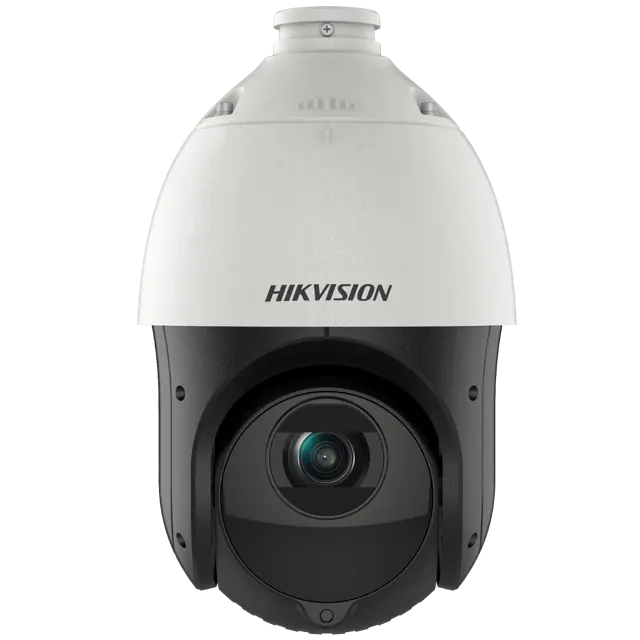
Hikvision DS-2DE4225IW-DE 2MP 25× Optical Zoom Network IR PTZ Speed Dome
In stock
PKR 95,000

